


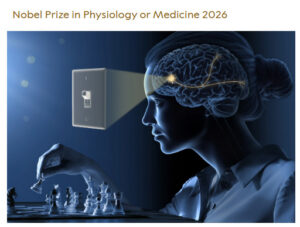
The laureates are Karl Deisseroth, a psychiatrist and bioengineer at Stanford University, and German researchers Peter Hegemann, a biophysicist, and Georg Nagel, a specialist in molecular physiology. Their work brought together expertise from biophysics, molecular biology, genetics, neuroscience, and psychiatry.
The discovery is based on light-sensitive proteins found in algae. These proteins respond to light by altering the movement of ions across the cell membrane. The researchers used these proteins to develop a way to activate or inhibit selected neurons using pulses of light. This led to the development of optogenetics, a method that enables researchers to investigate the activity of individual nerve cells and neural circuits in the living brain with high precision.
What does this mean for psychiatry?
Mental disorders are associated with complex changes in brain function, rather than the activity of a single brain region or individual neuron. Optogenetics enables researchers to investigate how the activity of specific neural circuits affects behavior and emotional responses. This is important for studying the biological mechanisms underlying depression, addiction, autism, and other conditions, as well as for identifying potential therapeutic targets.
At the same time, optogenetics remains primarily a research tool. Its widespread use in the treatment of mental disorders will require further research. Nevertheless, the ability to selectively alter the activity of neural circuits helps researchers better understand how the brain functions and which mechanisms may be relevant to developing new treatments.
Read more: Nobel Prize in Physiology or Medicine 2026